![English [GB]](../../../../language/en_GB/en_GB.jpg "English [GB]")
![Deutsch [DE]](../../../../language/de_DE/de_DE.jpg "Deutsch [DE]")
![English [US]](../../../../language/en_US/en_US.jpg "English [US]")
![Nederlands [NL]](../../../../language/nl_NL/nl_NL.jpg "Nederlands [NL]")
)
)
)
)
)
)
)
)
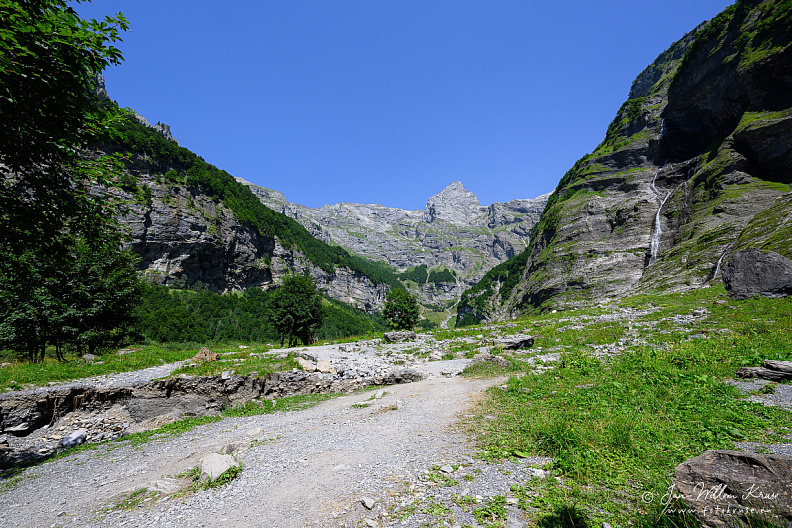
View towards Fond de la Combe (bottom of the valley) with the river Le Giffre
Camera brand and type used to take photo
 NIKON Z 9
Lens used
NIKON Z 9
Lens used
 NIKKOR Z 14-24mm f/2.8 S @ 14 mm
NIKON Z 9
Lens used
NIKKOR Z 14-24mm f/2.8 S @ 14 mm
Aperture used
 f/11.0
Exposure used
f/11.0
Exposure used
 1/100 s
Exposure compensation applied
1/100 s
Exposure compensation applied
 0.0 EV
ISO used
0.0 EV
ISO used
 80
80
f/11.0
Exposure used
1/100 s
Exposure compensation applied
0.0 EV
ISO used
80
Copyright © 2025 Jan-Willem Kruse (www.fotokruse.eu).
All rights reserved. For consideration only, no reproduction without prior permission.
All rights reserved. For consideration only, no reproduction without prior permission.
Photo Info
FGK-20250809-Z9-0322a-.jpg
2500*1667
(4944 KB)
1228x visited
Description
Headline
View towards Fond de la Combe (bottom of the valley) with the river Le Giffre
Caption
The Cirque du Fer-à-Cheval is a large cirque in the Giffre Massif in the French Prealps near the village of Sixt-Fer-à-Chevalat. This natural cirque lies at the end of the Giffre River valley (Vallée du Giffre) and has cliffs ranging from 500 to 700 meters in height. The cirque is surrounded by peaks reaching almost 3000 meters.
The Cirque du Fer-à-Cheval takes its name from the shape of its cliffs, which form a semicircle. Its impressive height (2000 m). The site comprises two parts: the Cirque du Fer-à-Cheval and the Fond de la Combe. The two are separated by the protrusion of the Pic de Tenneverge (2836 m) and its extension, the Cornes du Chamois (2523 m).
The rocks forming this Horseshoe Massif are limestones formed during the Jurassic period (199 to 145 million years ago). During the uplift of the Alps, from 50 MA, these rock masses were pushed towards the west and were strongly folded (some rocks multiple times).
In the cirque, around thirty waterfalls tumble from the cliffs in the spring when the snow melts. During the summer, eleven waterfalls remain. At the bottom of the valley, the Bout du Monde also has a good ten waterfalls.
The Cirque du Fer-à-Cheval takes its name from the shape of its cliffs, which form a semicircle. Its impressive height (2000 m). The site comprises two parts: the Cirque du Fer-à-Cheval and the Fond de la Combe. The two are separated by the protrusion of the Pic de Tenneverge (2836 m) and its extension, the Cornes du Chamois (2523 m).
The rocks forming this Horseshoe Massif are limestones formed during the Jurassic period (199 to 145 million years ago). During the uplift of the Alps, from 50 MA, these rock masses were pushed towards the west and were strongly folded (some rocks multiple times).
In the cirque, around thirty waterfalls tumble from the cliffs in the spring when the snow melts. During the summer, eleven waterfalls remain. At the bottom of the valley, the Bout du Monde also has a good ten waterfalls.
Image Alt text
-
Event
Holiday 2025 - Le Mont (Sixt-Fer-à-Cheval, France)
Keywords
Capture info
(IPTC Instructions)
(IPTC Instructions)
-
Location
Location
- - - -
Altitude
1046 meter
Properties
Original filename
Z9-0322a.NEF
Taken on
9-Aug-2025 14:24:32
Digital Source
Digital camera
Posted first on
30-Dec-2025 22:08:38
Update posted on
30-Dec-2025 22:09:04
Rating/label
Adobe Lightroom
Adobe Lightroom
Label and rating as set in Adobe Lightroom
***
Rating score
no rating
Update rating
Rate this photo
Copyright
Credit line
Copyright © 2025 Jan-Willem Kruse (www.fotokruse.eu)
Copyright
-
Copyright Notice
-
Photographer
Jan-Willem Kruse
Other Info
Related albums
Job identifier
-
0 comments